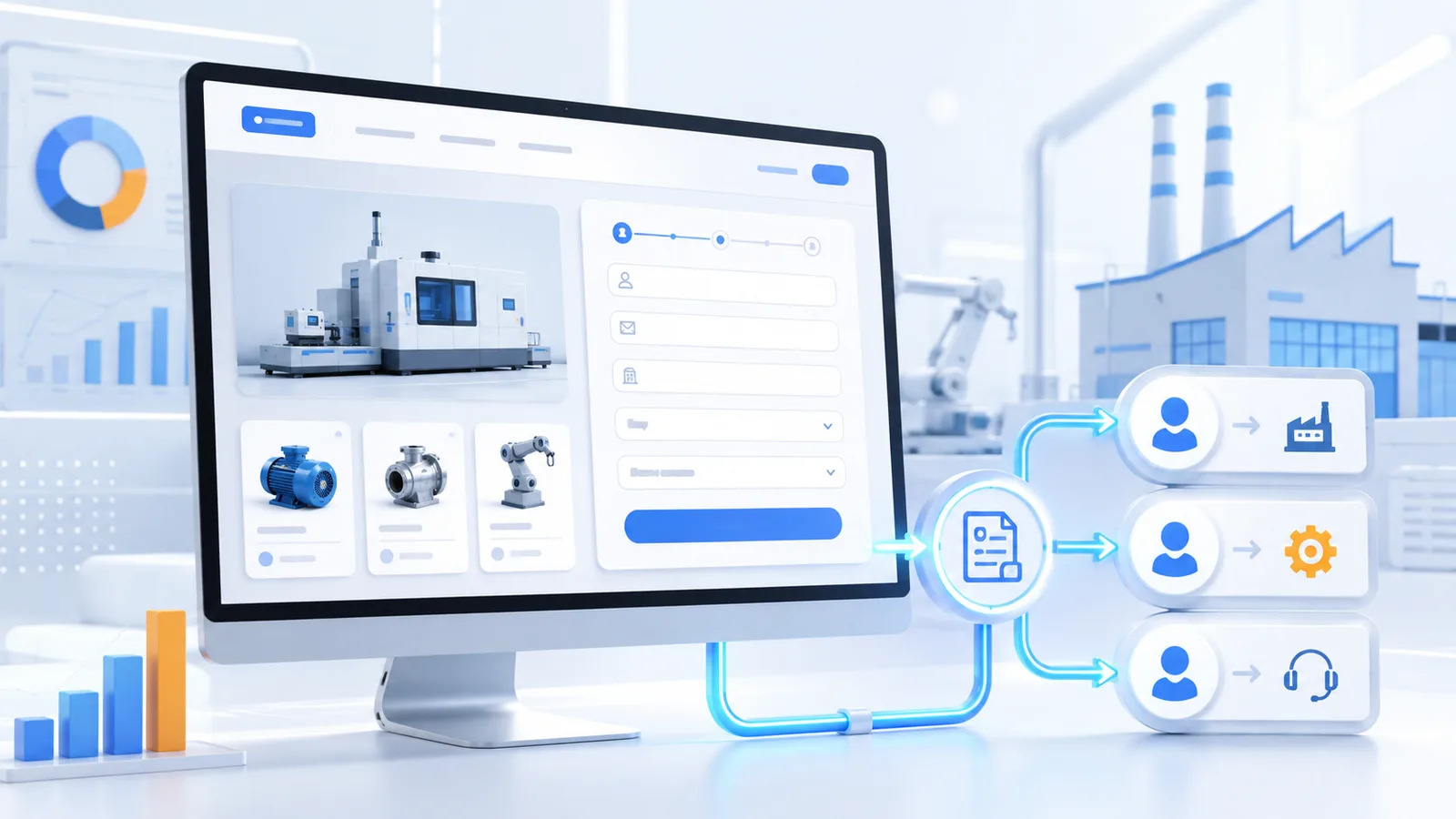
Make submission easy first
Many B2B landing pages ask for company name, phone, email, region, product, budget, timeline and notes at once. The form looks complete, but it may make real buyers leave before they contact the company.
A practical form should complete the first communication step. Name, contact details and project notes are useful, but not every field needs to become a hard barrier.
- Keep required fields limited.
- Use optional fields to support judgment, not to block submission.
- Explain products, applications and service scope before the form.
- Show a clear success message after submission.
Let page content qualify the buyer
Lead quality is not filtered only by the form. Product scope, suitable industries, delivery boundaries, service process, FAQs and pricing factors can all help buyers decide whether the offer fits.
If the page only lists generic strengths, a long form will not create high-quality information. Buyers may not know what to write, and sales teams will still need to explain everything again.
Design fields around sales judgment
Form fields should support follow-up decisions. Industrial landing pages can group fields into contact information, requirement information and project status.
- Contact information: phone, email, WeChat or any method the buyer prefers.
- Requirement information: product model, application, target market or purchase question.
- Project status: existing website, advertising plan, need for quote or need for materials.
- Open notes: allow buyers to describe needs in their own words.
Do not replace communication with strict rules
Some buyers only want to leave WeChat first. Some prefer email. Some write only one sentence. The form should allow these differences instead of rejecting the submission because the format does not match.
Website URL, budget and company name can be optional. Many early-stage buyers are not ready to provide every detail during the first visit.
Track the source behind each inquiry
Submission is only the first step. The system should record the page source, time, device and basic browsing path where possible. This helps separate homepage inquiries, ad landing page inquiries and article-driven question inquiries.
If the company later runs Baidu, Google or social campaigns, source information helps decide which pages deserve more optimization.
Landing page form checklist
- Can buyers submit with only the information they are willing to share?
- Does the page explain products, services and fit before the form?
- Does the button clearly describe the next step?
- Do mobile fields, buttons and notices fit without overflow?
- Is there a backup contact path such as email, phone or WeChat?
- Can the backend distinguish leads from different pages and channels?