Separate template and custom websites first
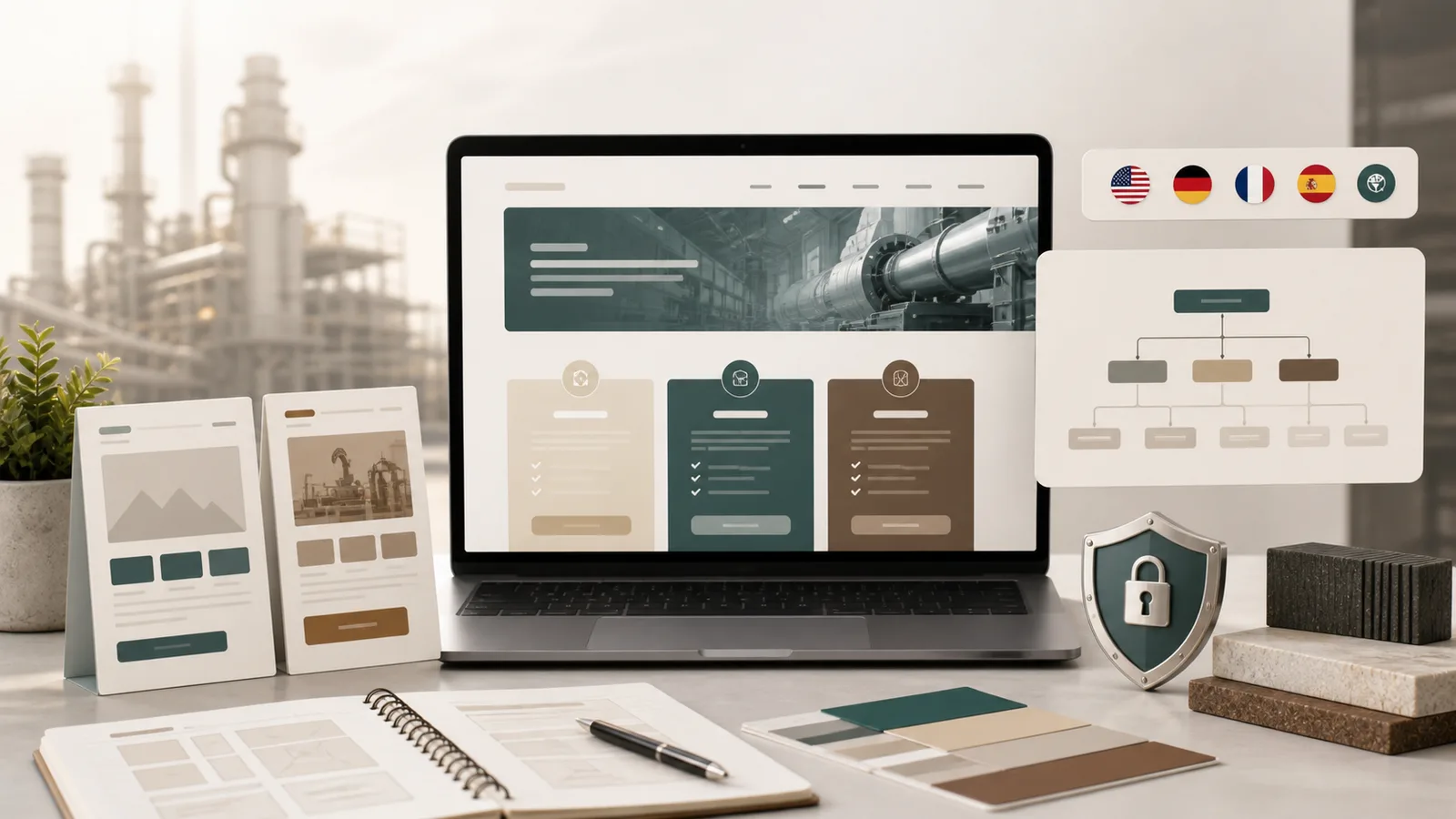
The most common pricing problem on a manufacturing website is mixing different website types into one number. A template website, a custom website, an export site, a landing page and a multilingual site do not require the same amount of work.
For example, the page can state “template website from RMB 6,000 / 3 years” and “custom website from RMB 15,000 / 3 years.” This does not turn every project into a fixed price. It helps buyers understand the starting budget level.
Clarify service term and language versions
Website pricing should explain the service term. Buyers may assume the price includes domain setup, hosting, maintenance, SSL, language content and future changes, but these items usually need to be confirmed separately.
If the quote is based on a three-year service term, the pricing card should say what the three years include. For multilingual websites, each language version should state whether translation, page entry, SEO titles and structured information are included.
- Website build: explain whether it is a one-time production fee or includes multi-year basic service.
- Language versions: clarify whether Chinese, English or other versions are priced separately.
- SSL certificate: for example, RMB 300 per year per language should be confirmed by domain and deployment setup.
- Content translation: state whether the client provides copy or needs translation and localization support.
Place included scope next to the price
A pricing page should not list only amounts. It should explain what work is included in the price. Common manufacturing website work includes site structure, page design, responsive development, product content organization, basic SEO, form setup and launch checks.
For a custom website, the page should also clarify whether it includes homepage visual design, product category planning, application pages, inquiry forms, sitemap, robots.txt, canonical tags and basic structured data.
Do not hide extra costs
Buyers are often less worried about a higher starting price than about unclear costs appearing later. A pricing page can list common additional costs in advance so buyers know what may change the quote.
- Additional language versions, extra pages and large-scale product entry.
- Complex forms, member systems, payment, third-party integrations or special admin features.
- Photography, video editing, product retouching and professional copy rewriting.
- Overseas hosting, special plugins, paid fonts, stock images and third-party services.
- Ongoing SEO, AI GEO content and advertising landing page optimization after launch.
Do not turn pricing into outcome promises
A website pricing page can explain deliverables and optimization direction, but it should not promise fixed rankings, indexing, inquiries or advertising returns. A website can improve presentation, crawlability, content understanding and inquiry handling conditions, while results still depend on product strength, market demand, competition, content maintenance and traffic sources.
A more responsible approach is to explain what foundation the website will build, what materials the company needs to provide, and what additional work is needed later for SEO, Google Ads or AI GEO.
Website pricing page checklist
Before publishing a pricing page, use this checklist to reduce confusion. The pricing section does not need to be complicated, but it must be clear enough for a buyer to judge fit.
- Does it separate template websites, custom websites, landing pages and multilingual sites?
- Does it explain service term, language versions and basic maintenance scope?
- Does it separate included scope, excluded scope and optional add-ons?
- Does it explain SSL certificates, hosting, translation, materials and third-party costs?
- Does it give a clear contact path for page count, language and function requirements?
- Have promises about indexing, rankings, inquiries or fixed results been removed?