Start by explaining what the budget buys
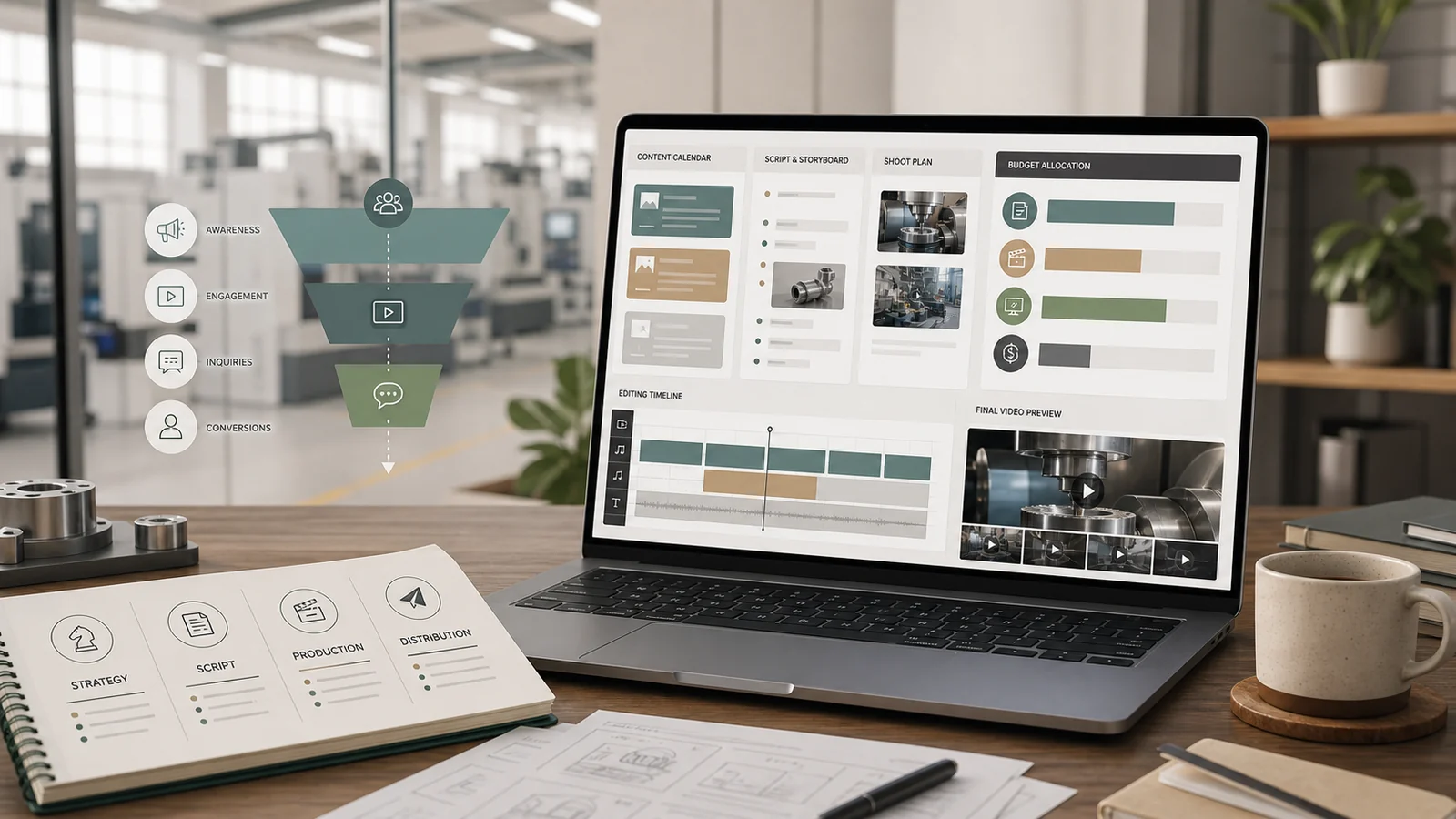
Many manufacturers treat short video pricing as a question of how many videos can be shot. In reality, performance depends on more than shooting and editing. Topic planning, scripts, product information, publishing rhythm, test distribution and lead handling all matter.
If a pricing page shows only one total number, buyers cannot judge the scope. A clearer expression is: industrial short video service from RMB 20,000, including 80 scripts, editing production and RMB 5,000 media spend allocation, while also stating what materials the company needs to provide.
Scripts and topics are not optional
Industrial videos often fail when they only show equipment footage without answering buyer questions. Buyers want to know what materials the equipment handles, how capacity is judged, where it is used, how difficult maintenance is, and what needs to be confirmed before selection.
That is why the budget should include topic and script work. Eighty scripts are not about chasing quantity. They turn buyer questions, product value, process details and sales explanations into a reusable content library.
- Product explanation: what the product is, who it fits and what problem it solves.
- Application scenario: industries, materials, site conditions and usage boundaries.
- Selection guidance: parameters, configuration, process and common mistakes.
- Trust building: factory, workflow, testing, delivery and service process.
Editing scope needs clear boundaries
Short video editing is not just stitching footage together. Subtitles, cover frames, pacing, shot order, product close-ups, voice clarity and the final call to action all affect whether buyers continue to learn more.
A quote should state the number of edited videos, typical duration, revision rounds, subtitles, horizontal or vertical versions, and whether the videos are prepared for the website, WeChat Channels, Douyin or sales sharing.
Media spend is a test configuration
If a package includes RMB 5,000 in media spend, it should be described as a distribution and testing budget, not an outcome promise. Media spend can help content gain initial exposure and test titles, visuals, audiences and regions.
Whether it creates qualified inquiries still depends on product demand, market region, video clarity, landing page support, sales response and competition. A responsible page explains the testing method rather than promising a fixed number of inquiries.
Design the inquiry path together
Short videos can surface interest, but they still need a follow-up path. After watching a video, buyers should know where to see product parameters, how to request a quote, how to submit requirements and whether they can reach sales or technical staff.
That is why video budgets should be planned together with product pages, landing pages, WeChat contact, forms and sales materials. Otherwise, videos may get views while buyers still do not know what to do next.
Check these six points before publishing
Manufacturers do not need to start with many accounts or a large amount of content. It is usually safer to explain one product line clearly first, then expand based on data.
- Does each video answer one specific buyer question?
- Are there around 80 reusable scripts and topics?
- Are editing quantity, duration, format and revision boundaries clear?
- Is media spend described as a test configuration rather than a result guarantee?
- Is there a website, form, WeChat or sales material path for inquiries?
- Have promises about deals, inquiries or advertising returns been removed?