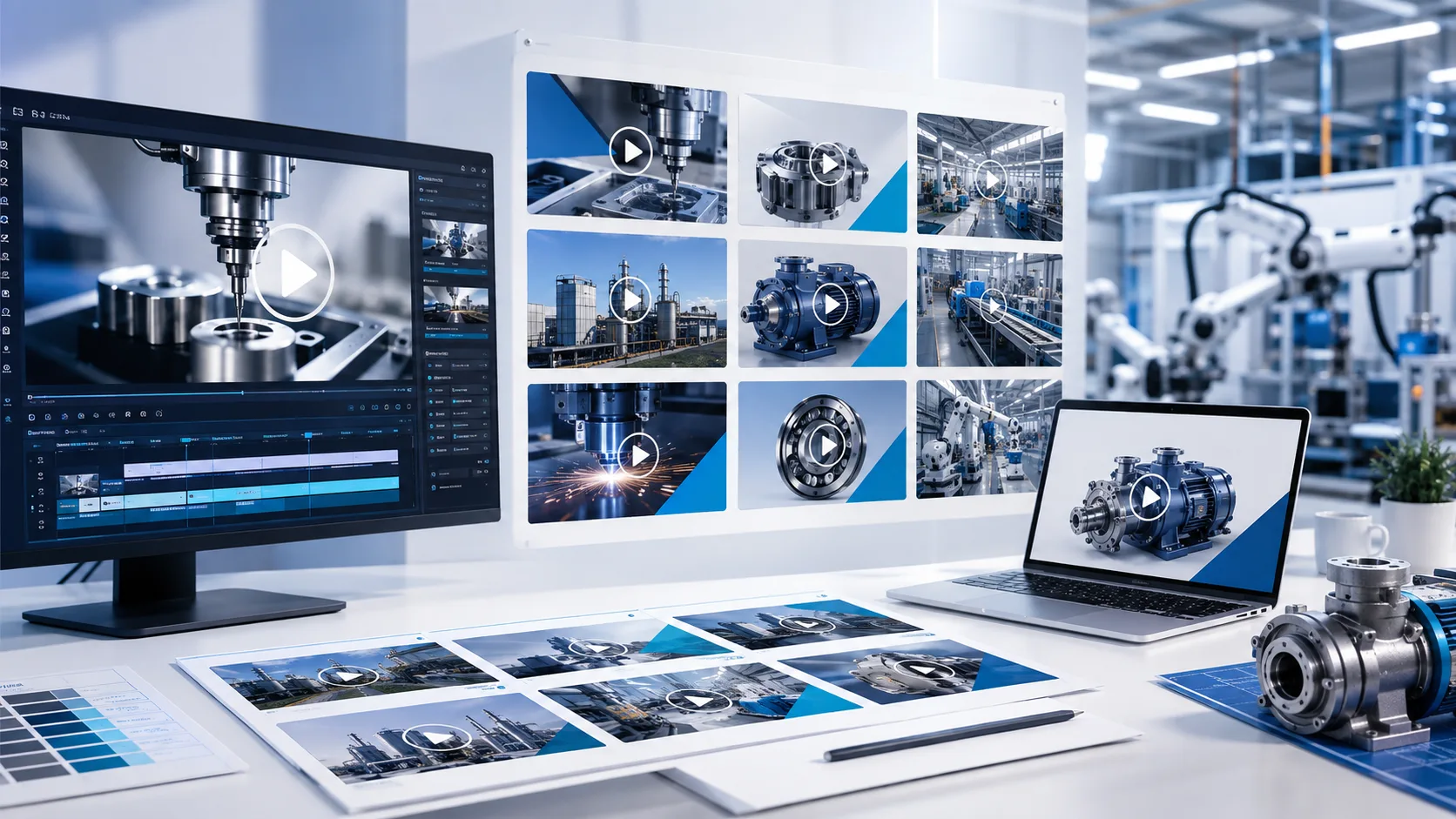
Start with the value of the video
When a company video performs poorly, the problem is not always the footage. In many cases, the cover does not tell the viewer why the video is worth opening. A factory overview, a full equipment shot or a generic team photo often gives too little context.
The cover should answer one practical question: does this video explain product structure, process, application, installation or a common buyer concern? Once the cover is clear, the title, script and landing page can support the same message.
- Product videos: show the product body and key component.
- Factory videos: show the production scene, equipment and process order.
- Application videos: show the use case and buyer problem.
- Explainer videos: show a question, comparison or operation step.
Use product detail and real scenes
Industrial video covers should not rely only on abstract technology backgrounds. Buyers care whether the product is real, whether the structure is clear and whether the use case matches their situation.
If products look similar, separate topics through angles, details, working conditions and backgrounds. The same machine can support different covers for control panels, key components, operating status and application scenes.
Use fewer words with clearer meaning
More cover text does not always improve clarity. On mobile screens, long text becomes visual noise and may hide the product. A short question or specific scene is usually enough; the title can carry the fuller explanation.
For example, “How this machine structure works” is clearer than “Professional equipment manufacturer strength display.” The first points to content; the second is a slogan.
- Keep one main message on each cover.
- Use short phrases instead of long titles.
- Do not cover important product details with text.
- Avoid exaggerated claims, absolute promises and clickbait.
Prepare different crops for each channel
A website article, WeChat Channels, Douyin, Toutiao, Baijiahao and sales PPTs may all use the same topic, but they do not need the same crop. Website articles and service pages usually need 16:9 images, while short video platforms often display vertical or square covers.
For each important video topic, keep horizontal, vertical and square versions. Avoid putting the product or text too close to the edge, because platform buttons and overlays may cover them.
Keep cover, script, title and landing page aligned
A cover should not be designed in isolation. If the cover promises a product structure explanation, the opening seconds, title, body copy and landing page should stay on that topic. If the video turns into a general company introduction, viewers will leave quickly.
Hulian Linglu Technology plans industrial short video topics, scripts, covers, editing and distribution paths together. The short video service starts from RMB 20,000 and usually includes 80 copy ideas, editing and RMB 5,000 ad budget allocation. Final scope depends on industry, footage, account setup, target market and landing path. Ad budget allocation should not be understood as a fixed consultation guarantee.
Use a launch checklist
Before publishing, a simple checklist can prevent most cover problems. The checklist should review not only visual appeal but also buyer understanding and page context.
- Can the viewer identify the product or scene quickly?
- Is the cover text short, clear and free from over-promising?
- Do the cover, title and script answer the same question?
- Do horizontal, vertical and square crops keep the subject visible?
- Does the website page provide text context for the video topic?
- Do service pages, insight articles and contact paths link to each other?