Define what buyers should understand
A voiceover is not a spoken version of the company profile. It should support buyer judgment: what the company does, which applications it fits, why it is credible and how the buyer can continue the conversation.
Manufacturing products, processes and equipment are often technical. If the voiceover only says that the company is professional, reliable and service-oriented, the buyer still may not understand the specific value.
- Which industries or applications does the company mainly support?
- What product, production or delivery evidence matters most?
- Should interested buyers continue to the website, service page or contact path?
Keep each sentence focused
Voiceover is heard, not studied like a document. Many companies put company history, product series, equipment lists, certificates and slogans into long sentences. The result may sound formal, but the message is hard to remember.
A better method is to keep one sentence to one idea: buyer problem, company capability or visual evidence. Shorter sentences make the footage and narration work together.
Let footage and narration divide the work
Footage can already show workshops, machines, products and inspection steps. The voiceover does not need to say “this is our workshop” or “this is our equipment.” It should add what the footage cannot explain by itself: process purpose, inspection logic, application value and service boundaries.
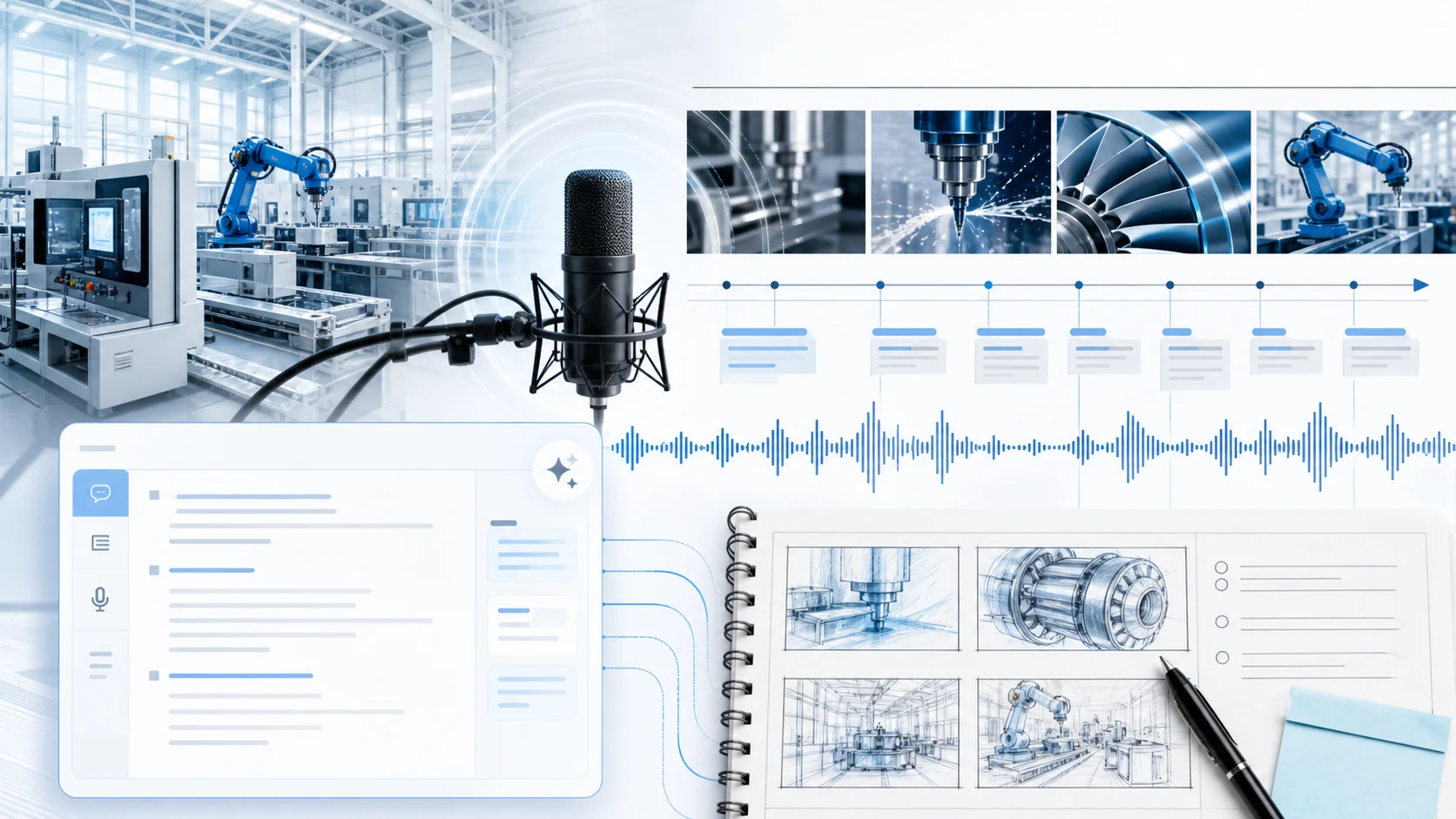
When drafting, use a three-column storyboard: what the viewer sees, what the voiceover adds and what the buyer should understand.
- Workshop views: explain production organization and delivery capability.
- Product close-ups: explain structure, material or application value.
- Inspection shots: explain why the test matters and what it affects.
- Shipping scenes: explain packaging, delivery process and communication points.
Make pricing and scope explainable
Brand film pricing is usually affected by duration, filming days, editing complexity, script planning and revision rounds. The website can publish a reference range of RMB 8,000 to RMB 15,000 per minute, but the final scope should be confirmed by script, locations, shot count, animation needs and delivery formats.
If 3D animation or VR content is involved, seconds, complexity and asset requirements should be explained separately. A reference range such as RMB 400 to RMB 800 per second can help buyers judge budget fit when scope is clear.
Reuse the script across website and sales
A good brand film voiceover is not only for the video. It can also be adapted into website service copy, product page explanations, sales PPT openings, media posts and short video scripts.
This is why the script should keep reusable fact-based sentences. A sentence that explains how a company supports manufacturing, delivery or application decisions is more useful than a generic slogan.
Check three things after launch
After the film is published, view count is not the only useful signal. More practical checks include whether buyers understand the core business, whether sales teams are willing to share the film, and whether the website provides a clear next step.
Hulian Leading Technology plans brand film narration, storyboard, website copy and short video reuse together, so one filming project can become a longer-term content asset.
- Does the video page link to the right service and contact pages?
- Can the voiceover be reused in website articles or sales PPT material?
- Do cover, title, intro and page description express the same topic?